Content Warnings
- 🔴 90/100 Explicit sex scene with partial nudity.
- 🔴 95/100 Another explicit sex scene with full nudity.
- 🟡 30/100 Character is seen smoking a cigarette.
- 🟡 50/100 Characters are shown drinking alcohol in a bar.
- 🔴 75/100 A violent altercation between two characters.
- 🔴 85/100 Graphic depiction of a character's death.
- 🟡 60/100 Use of a strong expletive.
- 🟡 60/100 Another instance of strong language.
Details for Auf der anderen Seite (2007)
What is the plot of the movie 'Auf der anderen Seite' (2007)?
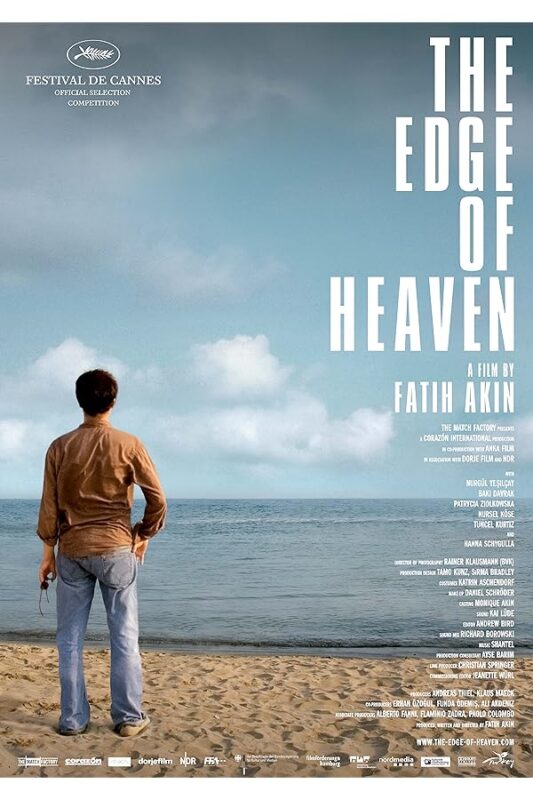
'Auf der anderen Seite' (2007), also known as 'The Edge of Heaven,' is a German-Turkish drama directed by Fatih Akin. The film intertwines the lives of six characters—Nejat (Baki Davrak), Ayten (Nurgül Yesilçay), Yeter (Nursel Köse), and others—across Germany and Turkey. It explores themes of love, loss, and reconciliation as their paths cross in unexpected ways, dealing with political exile, family bonds, and cultural divides.
Who are the main actors in 'Auf der anderen Seite' (2007)?
The main actors in 'Auf der anderen Seite' include Baki Davrak as Nejat, Nurgül Yesilçay as Ayten, Tuncel Kurtiz as Ali, and Nursel Köse as Yeter. Their performances bring depth to the film's exploration of complex relationships and cultural conflicts.
What awards did 'Auf der anderen Seite' (2007) win?
'Auf der anderen Seite' received critical acclaim and won several awards, including the Best Screenplay prize at the 2007 Cannes Film Festival. It was also nominated for the Palme d'Or and won the LUX Prize from the European Parliament, among other accolades.
Is 'Auf der anderen Seite' (2007) part of a trilogy?
Yes, 'Auf der anderen Seite' is the second installment in Fatih Akin's 'Love, Death and the Devil' trilogy, which explores themes of cultural identity and human connection. The trilogy begins with 'Gegen die Wand' (2004) and concludes with 'The Cut' (2014).
What languages are spoken in 'Auf der anderen Seite' (2007)?
The film features dialogue in both German and Turkish, reflecting the cultural duality of its characters and settings. Subtitles are typically provided for non-German and non-Turkish-speaking audiences.