Content Warnings
- 🟢 10/100 Brief implication of an affair, no nudity or explicit content.
- 🟡 30/100 Characters are seen drinking alcohol in social settings.
- 🟡 50/100 Main character is shown drinking heavily in a scene.
- 🟢 20/100 A character slaps another character's face during an argument.
- 🟢 10/100 Mild language, such as 'damn' is used.
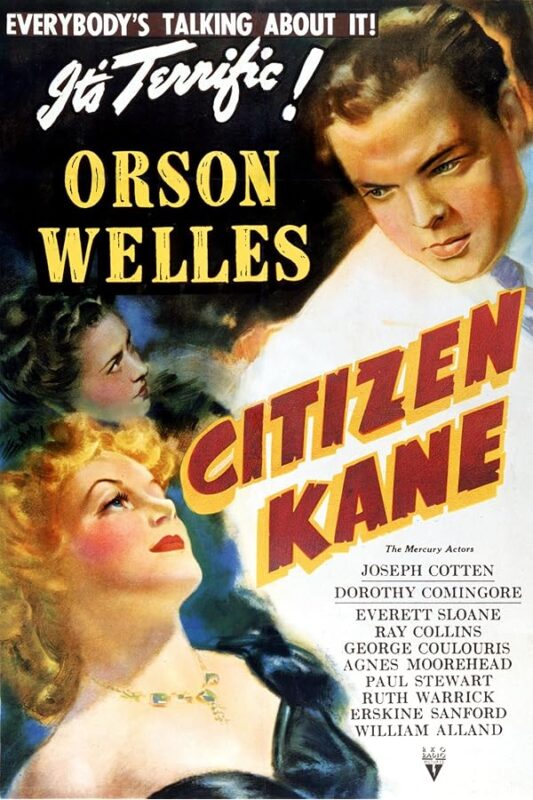
Details for Citizen Kane (1941)
Who directed and starred in Citizen Kane?
Citizen Kane was directed by Orson Welles, who also starred in the film as Charles Foster Kane.
What is the central mystery in Citizen Kane?
The central mystery in Citizen Kane revolves around the meaning of Charles Foster Kane's last word, 'Rosebud,' which a reporter investigates to uncover the truth about Kane's life.
Who plays Kane's second wife, Susan Alexander, in the movie?
Dorothy Comingore plays Susan Alexander, Kane's second wife, in Citizen Kane.
What is the significance of the film's non-linear narrative?
The non-linear narrative in Citizen Kane is significant because it presents Kane's life through multiple perspectives, reflecting the complexity and ambiguity of his character and the difficulty of truly knowing someone.
How was Citizen Kane received upon its initial release?
Upon its initial release, Citizen Kane received critical acclaim for its innovative techniques and storytelling, but it was a commercial failure due in part to controversy surrounding its portrayal of a character resembling newspaper magnate William Randolph Hearst.