Content Warnings
- 🟡 30/100 Mock military parades with exaggerated violence.
- 🟡 50/100 Satirical depiction of war and aggression.
- 🟢 10/100 Mild insults and satirical language.
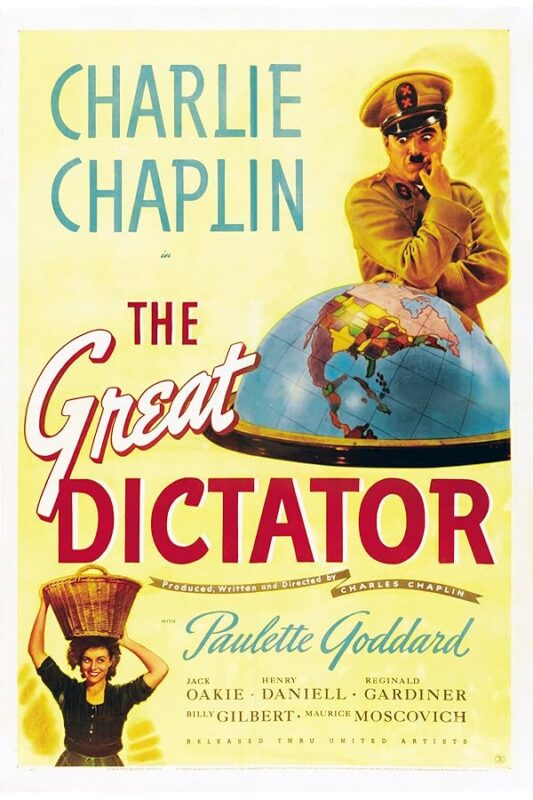
Details for The Great Dictator (1940)
Who directed and starred in 'The Great Dictator'?
'The Great Dictator' was directed by and starred Charles Chaplin, who played the dual roles of Adenoid Hynkel, the dictator of Tomania, and a Jewish barber.
What is the main plot of 'The Great Dictator'?
The film is a satirical comedy that critiques fascism and Adolf Hitler. It follows the story of a Jewish barber who is mistaken for the tyrannical dictator Adenoid Hynkel, leading to a series of humorous and poignant events.
Who are the main co-stars in 'The Great Dictator'?
The main co-stars include Paulette Goddard as Hannah, Jack Oakie as Benzino Napaloni (a parody of Benito Mussolini), and Reginald Gardiner as Commander Schultz.
Why is 'The Great Dictator' considered significant in film history?
The film is significant as it was Chaplin's first full-sound film and a bold political satire released during World War II, openly mocking Hitler and the Nazi regime at a time when the U.S. was not yet at war with Germany.
What is the famous speech at the end of 'The Great Dictator'?
The film concludes with a powerful and emotional speech by Chaplin (as the barber mistaken for Hynkel), advocating for peace, humanity, and democracy, which remains one of the most iconic moments in cinema history.